
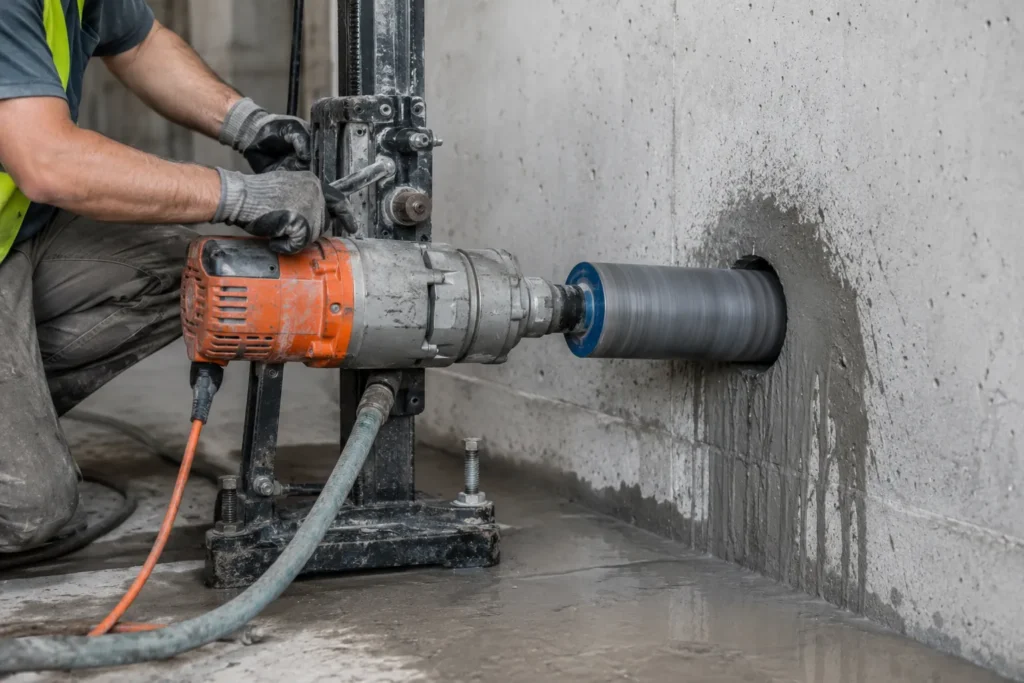
Core Drilling plays a vital role in modern construction and renovation projects. This technique creates precise circular openings in concrete, asphalt, brick, and stone. Contractors rely on it for plumbing, electrical systems, HVAC installations, and structural modifications. According to industry reports from 2025, diamond core drilling technology can achieve accuracy within 1 millimeter. That level of precision reduces waste and improves project efficiency.
Professional contractors use specialized drilling equipment fitted with diamond-tipped bits. These tools cut through dense materials without causing excessive vibration. We have seen how this approach minimizes structural damage compared to traditional breaking methods. Experts in concrete services recommend core drilling because it delivers clean openings and lowers repair costs. Depending on the diameter and material thickness, drilling rates range from 1 inch to 24 inches per minute. This versatility makes the method suitable for residential, commercial, and industrial applications.
Understanding Core Drilling Technology
How the Process Works
Core Drilling removes a cylindrical section from solid materials. A rotating drill bit containing industrial diamonds cuts through surfaces while water cools the equipment. The extracted core remains intact, allowing engineers to inspect material quality if needed.
Modern core drills operate between 500 and 3,000 RPM. Bit sizes range from 0.5 inches to 60 inches. Contractors select the appropriate speed and diameter based on material density. Reinforced concrete often requires slower drilling speeds because of embedded steel. Experienced operators monitor pressure to maintain clean cuts and extend tool life.
Equipment Used for Core Drilling
Professional crews use several types of drilling systems depending on project requirements.
Common equipment includes:
- Handheld core drills for small openings.
- Rig-mounted drills for heavy-duty applications.
- Hydraulic drilling systems for industrial sites.
- Electric diamond core drills for indoor projects.
- Vacuum-mounted rigs for smooth surfaces.
Diamond segments account for nearly 95% of professional drilling applications worldwide. Their durability allows contractors to drill hundreds of holes before replacing components. Start your journey with our guide to Core Drilling.
Benefits of Core Drilling
Precision and Reduced Structural Damage
Core Drilling provides exceptional accuracy. Unlike jackhammers, diamond drilling creates smooth openings with minimal cracking. This feature protects surrounding structures and preserves material integrity.
Industry studies conducted in 2024 found that vibration levels from diamond drilling are up to 80% lower than traditional demolition methods. Reduced vibration lowers the risk of damage to nearby foundations and walls. We have observed that projects using core drilling often require fewer repairs after installation work.
Improved Efficiency and Safety
Efficiency remains one of the biggest advantages of Core Drilling. Faster drilling speeds shorten project timelines and reduce labor costs. Contractors can complete utility openings without extensive demolition.
Additional benefits include:
- Low dust generation with water cooling systems.
- Reduced workplace noise.
- Greater operator control.
- Cleaner openings for pipe installations.
- Less material waste.
According to occupational safety studies, wet drilling systems can decrease airborne silica dust exposure by more than 90%. This improvement supports healthier working environments.
Common Applications of Core Drilling
Construction and Building Services
Core Drilling supports a wide range of building activities. Contractors frequently create openings for water pipes, electrical conduits, and ventilation systems. Hospitals, schools, offices, and residential developments all depend on these services.
HVAC contractors often require holes between 4 and 12 inches in diameter. Plumbing installations usually need openings from 2 to 8 inches. Precision drilling allows these systems to fit accurately without weakening structural elements.
Infrastructure and Industrial Projects
Large-scale infrastructure projects rely heavily on Core Drilling. Highway expansions, bridges, airports, and tunnels require accurate openings for anchors and utility systems. Industrial facilities also use the technique for machinery installations.
Engineers value extracted concrete cores because they provide samples for strength testing. Laboratory analysis helps determine compressive strength and structural condition. This process supports maintenance programs and safety inspections.
Typical Core Drilling Applications
| Application | Hole Diameter Range | Common Material |
|---|---|---|
| Plumbing Pipes | 2–8 inches | Concrete |
| HVAC Systems | 4–12 inches | Reinforced Concrete |
| Electrical Conduits | 1–6 inches | Brick and Masonry |
| Anchor Bolts | 0.5–4 inches | Stone |
| Bridge Testing | 2–6 inches | Concrete |
| Industrial Equipment | 6–24 inches | Thick Concrete |
Factors That Influence Core Drilling Performance
Material Density and Bit Selection
Several factors determine drilling speed and efficiency. Material composition significantly affects performance. Reinforced concrete containing steel requires stronger diamond segments and slower feed rates.
Professional operators evaluate:
- Concrete strength.
- Material thickness.
- Reinforcement density.
- Required hole diameter.
- Accessibility of the work area.
Experienced contractors often adjust drilling pressure to prevent overheating. Proper water flow also extends bit life and maintains cutting efficiency. In our experience, selecting the right bit specification improves productivity and lowers equipment costs.
Conclusion
Core Drilling has become an essential technique for construction, renovation, and infrastructure projects. Its ability to create accurate openings while minimizing damage makes it highly valuable. Modern diamond drilling equipment delivers lower vibration, reduced dust, and faster completion times. These advantages improve safety and project efficiency.
From plumbing installations to bridge inspections, Core Drilling serves countless applications across multiple industries. Professional contractors continue to favor this method because it provides precise results and protects structural integrity. As drilling technology advances, its role in modern construction will remain increasingly important.